

In the Playground
1
Open the Datasets playground
Sign in and open agent.tinyfish.ai/playground/datasets.
2
Describe the dataset
Type what you want as one sentence: the kind of thing each row is, where or which ones, and the fields you need.Click Build. TinySet plans the columns from your sentence, which can take up to a minute.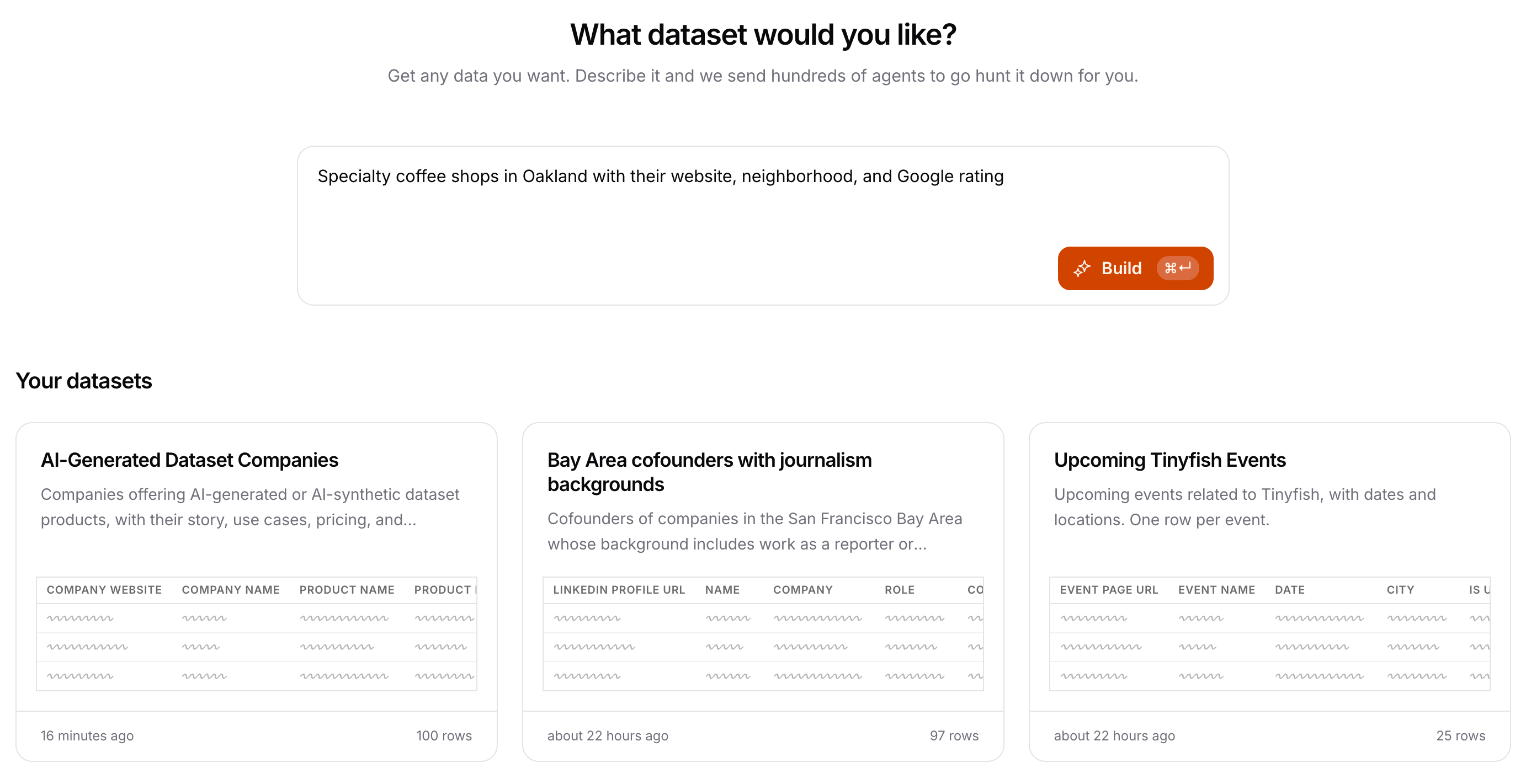
3
Review the schema
Check the planned columns before anything runs: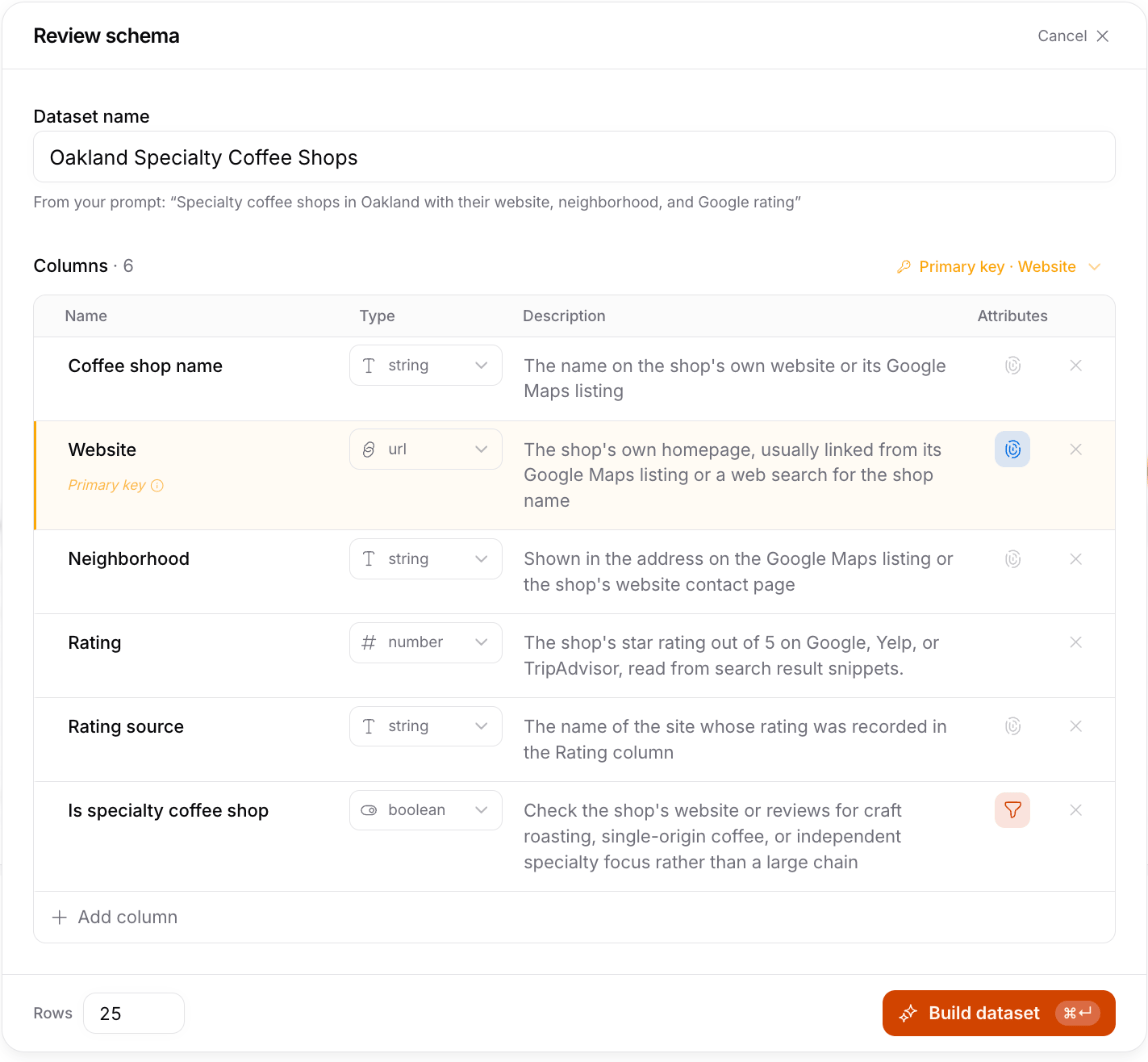
- Name the dataset.
- Edit columns. Rename them, change their type, or add an optional description that tells TinySet where to look for the value. A dataset has up to 10 columns, the key included.
- Primary key. Pick one column from the Primary key menu above the columns. It decides when two rows are the same thing, so pick something unique to each one, like a website or street address. A name alone can merge two locations of the same chain.
- Unique. Click the fingerprint icon to mark another column as one value per row, like a profile URL. Rows that share its value merge into one.
- Filter. Click the funnel icon on a yes/no column to keep only rows where it is true, such as “Has a roaster on site”.
- Rows. Set how many rows to fill to, from 1 to 250. Start with 25 to see results sooner.
4
Watch it fill
Rows appear in the table as TinySet finds them. A run usually takes 5 to 20 minutes, and you can leave the page and
come back. Your datasets are listed under Your datasets.
5
Use the results
Click Settings on the dataset to: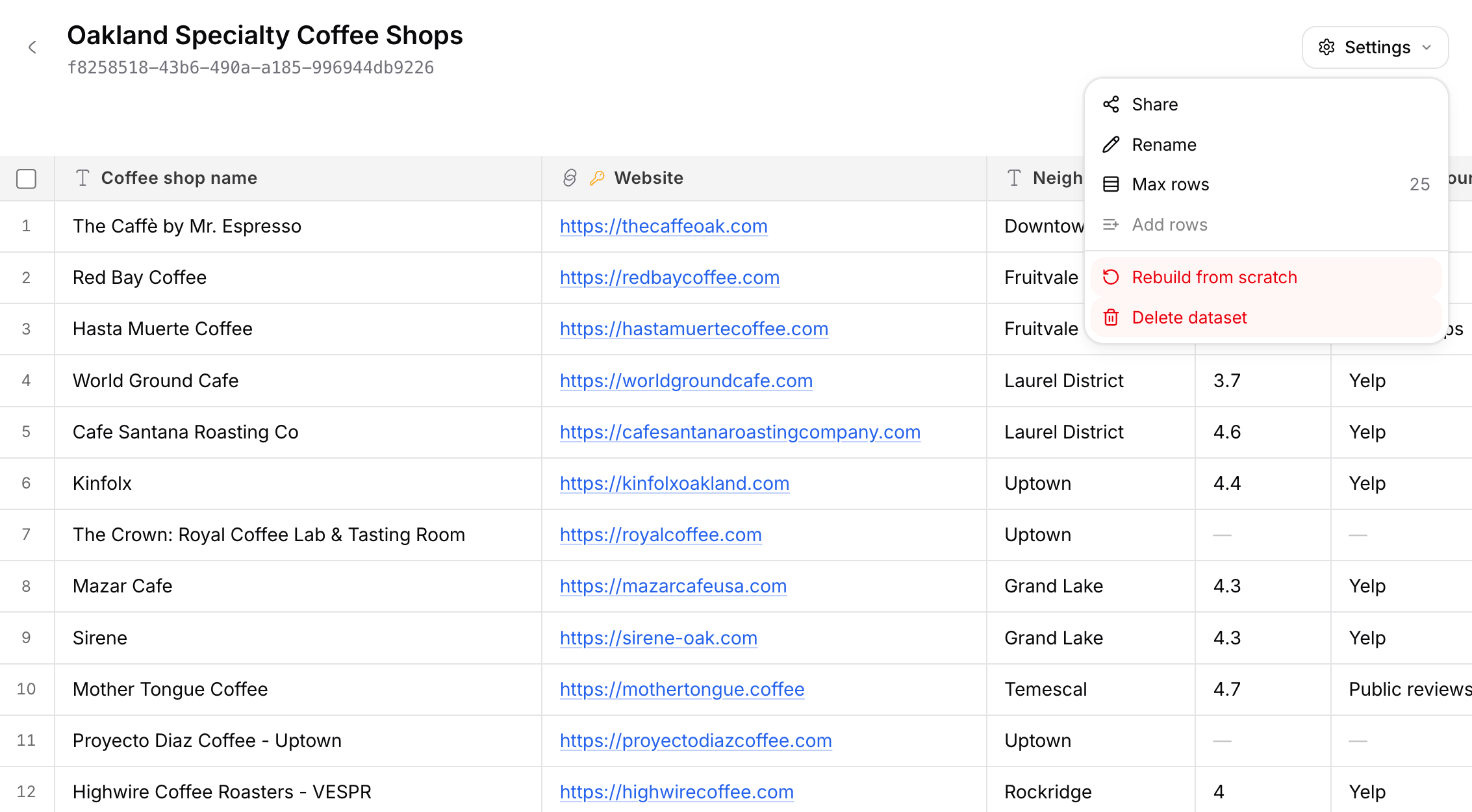
- Share to turn on a read-only link. Anyone with the link can view the table.
- Rename the dataset.
- Max rows to change the row target.
- Add rows to fill up to the row target. Rows you already have are kept, and only new rows are billed.
- Rebuild from scratch to empty the table and fill it again. Every row is researched and billed again.
- Delete dataset to remove it for good.
Write a Good Prompt
- Name the entity. “Coffee shops” works better than “coffee in Oakland”. Each row should be one thing.
- Scope it. Add a place, a date range, or a category: “opened since 2024”, “in the Bay Area”, “Series A only”.
- List the fields. Every field you name becomes a column. Fields you leave out are left out.
- Prefer facts on public pages. Websites, addresses, founders, prices, and ratings fill well. Private or paywalled data does not.
- Don’t ask for a ranking. “Top 10” returns 10 matching rows, not the 10 best. Ask for a column such as a rating and sort it yourself.
From the CLI
Install the CLI and sign in:create and populate wait for the run by default. Add --async to return right away, then follow the run with
tinyfish dataset watch <dataset_id> <run_id>.
From the API
Create an API key at agent.tinyfish.ai/api-keys and export it:spec if you need to, then create the dataset from it:
GET /v1/datasets/{id}/runs/{run_id}/events, or check GET /v1/datasets/{id} until status is
ready, failed, or cancelled. A failed run explains why in run.error. Then page through
GET /v1/datasets/{id}/rows. See the reference for every field.
Read Next
Datasets reference
Endpoints, the spec format, statuses, events, errors, and limits
CLI setup
Install the CLI and manage your API key